
 Harriet Wetton
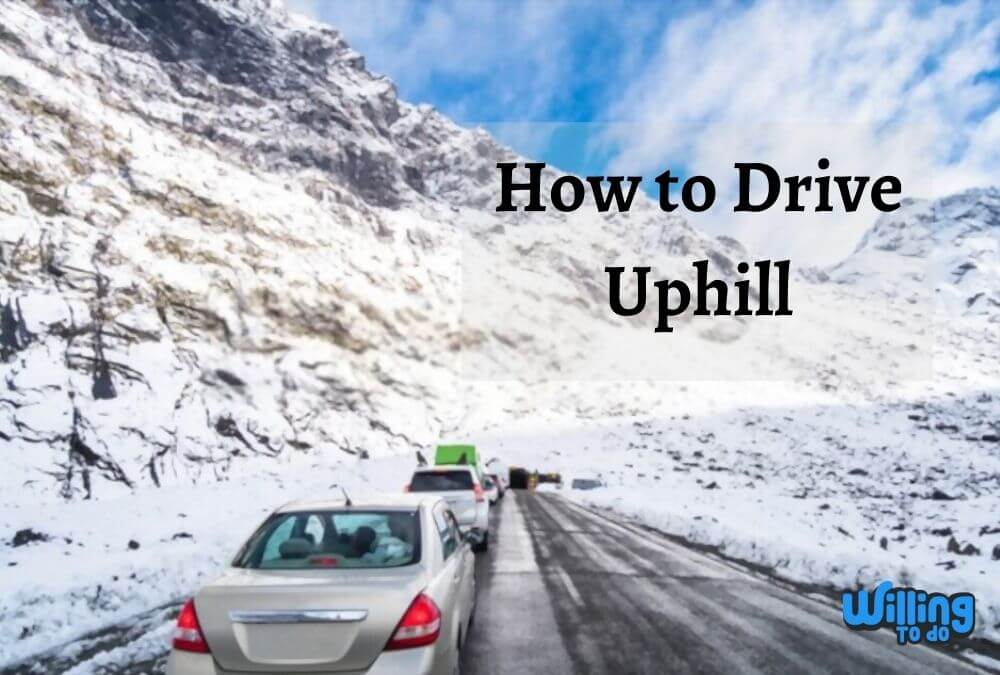
However, beneath that scenic beauty lies a challenging driving environment that requires skill, patience, and the right knowledge. Moving carefully through mountain passes is not just a suggestion; it is a necessity for your survival and the safety of others.
Winter demands that we follow specific precautionary measures to stay on the road. If you want to master the ascent without getting stuck or sliding, this guide offers a complete solution for how to drive uphill in the snow.
From mechanical preparation to advanced traction techniques, let us look at the practical tips that will keep you moving upward even when the conditions get tough.
Points to Ponder Before You Head Upward
Driving is an art that allows you to enjoy recreational travel alongside stunning scenery. However, before you even put the car in gear, there are several things you should check.
Whether you are moving on flat ground or learning how to drive uphill, preparation is the foundation of safety. Let’s look at what you need to do before starting your journey to ensure you are not caught off guard by the elements.
- Briefly inspect your vehicle before every trip, especially when heading into the mountains where help is far away.
- Verify that your brakes are functioning perfectly and showing no signs of weakness or “sponginess.”
- Consider changing your brake pads if they are worn, regardless of whether you have an automatic or manual transmission.
- Check the water levels in the radiator and ensure your wipers are in excellent condition to clear heavy snow.
- Keep your focus entirely on the road ahead rather than the drop offs on the side.
- Always carry a spare wheel and the necessary tools for a quick change in a safe area.
- Avoid looking away to the left or right to see the views; enjoy the scenery through your windshield to stay safe.
- Do not use cell phones while driving because the danger increases significantly on steep inclines. If you must use a phone, ask a passenger to handle it for you.
Mastering the Technique: How to Drive Uphill in the Snow
Every skill has its own technique, and mountain driving is no different. Driving in snowy hills requires a specific approach to maintain control and momentum. These premium suggestions on how to drive uphill will help make your travel much easier and more predictable.
Check all the Mechanical Inputs of the Car
The first and most vital step before taking your vehicle into the mountains is to check every mechanical input. You need to ensure that the accelerator, brakes, and steering are smooth and gradual. On a snowy incline, any sudden movement can cause disaster.
To make sure your vehicle is ready, it is wise to perform a quick maintenance check. This is because any jerky input on a slippery surface will cause the tires to lose traction and start sliding.
Being conscious of how your car responds to your touch is the secret to how to drive uphill without losing control.
If you feel a lag in your steering or a vibration in the pedal, address it before you reach the steep slopes. Expert drivers know that consistency and preparation are what separate a safe trip from a dangerous one.
Maintain a Consistent Speed During the Ascent
A key point to remember is that consistency is better than speed. When you are figuring out how to drive uphill, your speed matters much more than on flat land.
You want to maintain a steady pace that provides enough momentum to get over the crest without spinning your wheels.
Imagine you are facing a very sharp, steep section of road. You should approach it at a controlled, low speed. If you try to floor the gas pedal once you are already on the steep part, you will likely just spin your tires in place.
On the way back down, the rule stays the same; keep it slow and steady. Gravity will naturally try to speed you up, so you must work against it using your engine.
In many mountain regions, such as near salt bridges or high passes, signs indicate safe speeds. This is because vehicles can accelerate quickly due to the natural flow of the terrain.
Usually, a speed of around 30 miles per hour is plenty for most uphill slopes, ensuring you have time to react if the car in front of you slips.
Use Brakes and Lower the Gear When You Drive Uphill
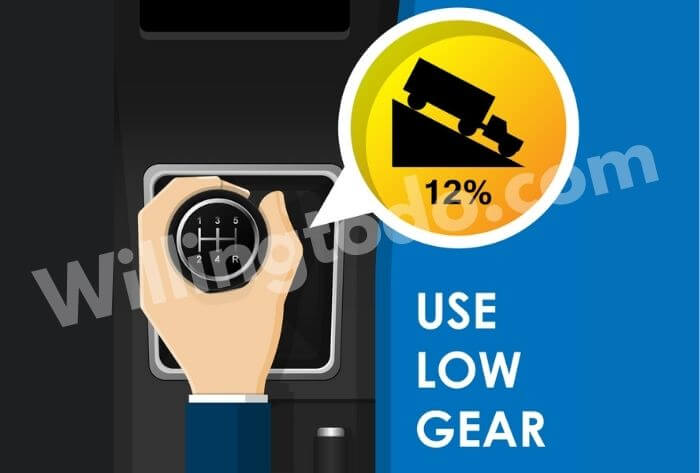
While driving, you should learn to use your gears to help your brakes. Using the brakes alone on a long climb or descent can cause the brake components and fluids to overheat. This leads to brake fade, where your stopping power significantly decreases.
When you use a lower gear, the engine naturally helps slow the vehicle down. This is a critical part of knowing how to drive uphill and downhill safely. If you find your car struggling to climb, shifting to a lower gear provides more torque to the wheels and keeps your engine in a stronger power band.
If you need to slow down on a steep grade, lightly tap the brakes and shift down. For instance, if you are in third gear and the car starts to gain too much speed, shift to second gear.
This uses the transmission to help regulate your speed, preserving your brakes for when you truly need them to stop the vehicle. Understanding acceleration and how gears counteract it is a professional level skill.
Keep Your Car Full of Fuel at All Times
It is common sense to check your fuel before a long trip, but in the mountains, it becomes a safety priority. If you see your needle dipping toward half, it is time to fill up. In remote hilly areas, fuel stations are few and far between.
Furthermore, your car consumes fuel much faster when climbing steep inclines compared to cruising on a highway. When you are focused on how to drive uphill, the last thing you want is the low fuel light to turn on in a blizzard.
Always ensure your tank is full before you enter a mountain pass to avoid being stranded in freezing temperatures. This is a simple step that provides huge peace of mind.
Avoid Unnecessary Acceleration and Deceleration
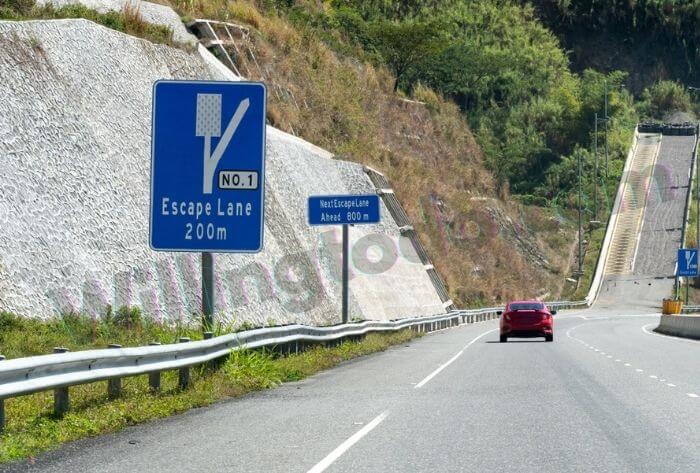
To master how to drive uphill, you must learn to read the road ahead. Anticipation is your best friend. If you see a clear stretch of road, you can maintain your speed. If you see a curve coming, ease off the gas early rather than slamming on the brakes at the last second.
Constant stopping and starting on a snowy hill is the quickest way to get stuck. Every time you stop, you lose the rolling momentum that helps you climb. Try to keep a slow, crawling pace instead of coming to a full stop if traffic is moving slowly.
This conservation of movement is a hallmark of expert winter driving. Just like following a healthy daily routine, being consistent with your driving habits leads to the best long term results.
Park Your Car if the Brakes Start to Heat Up
Sometimes, despite your best efforts, your brakes might get too hot. You might smell a burning odor or feel a vibration in the pedal. In these situations, you should find a flat, safe place to pull over. Let the car sit and allow the brakes to cool down naturally.
When you park in the mountains, always use your handbrake and leave the car in gear. Finding an even surface is important so that the car does not put unnecessary stress on the parking system while cooling. Safety should always come before your schedule.
The Danger of Pouring Water on Hot Brakes
There is a common mistake people make when their brakes are smoking; they throw water on them. This is a big mistake. When you are learning how to drive uphill, you must understand that hot metal reacts poorly to cold water. If you pour water on hot brake pads or rotors, they can warp or crack instantly.
Warped brakes will vibrate and lose their ability to stop the car effectively. Additionally, brake fluid is naturally hygroscopic, meaning it attracts moisture. If water gets into the system, it can lead to corrosion and eventual brake failure.
Just let the air cool them down naturally. It takes longer, but it is much safer for your vehicle. Just as you would take care of yourself by proactive means, take care of your car with the same logic.
Maintain a Safe Following Distance

There is a vital rule for any road, but it is magnified when you want to know how to drive uphill in the snow. You need much more space than usual to react.
If the car in front of you loses traction and starts to slide backward, you need enough room to steer clear or stop without becoming part of a pile up.
A good rule of thumb is to keep a distance of at least five car lengths if you are moving at a moderate speed. In snowy conditions, your stopping distance can be ten times longer than on dry pavement.
If you follow too closely, you are putting yourself at the mercy of the driver in front of you. Stay back and give yourself an escape route.
Slow Down and Be Courteous to Other Drivers
Occasionally, you might find a driver behind you who is in a big hurry. Do not let them pressure you into driving faster than you feel comfortable. If someone is riding your bumper, simply slow down further, signal, and pull over when it is safe. Let them pass.
When learning how to drive uphill, you will encounter many tight corners and blind spots. Accelerating into these corners is a recipe for disaster. Many mountain roads are narrow, and there is no room for error.
Staying in your lane and maintaining a controlled speed ensures that you do not cause a traffic jam or a collision. Mountain driving is a give and take environment; being helpful to others usually keeps everyone safer.
Understand and Control Traction in the Snow
Modern vehicles come with sophisticated traction control systems. These are designed to stop your tires from spinning wildly when you hit a patch of ice.
However, these systems are not perfect for every scenario. While they are great for dry pavement, they can sometimes work against you on a long snowy climb.
The issue is that traction control works by reducing engine power when it senses a wheel slip. If you are halfway up a hill and your wheels slip a little, the computer might cut the power so much that you lose all your momentum.
In some specific cases, a little bit of wheel spin is actually helpful to dig through the top layer of snow to find grip below.
Maintaining momentum is the most important part of how to drive uphill. If your car has a Snow Mode, use it. This adjusts the transmission and traction settings to provide a smoother start. If you do start to slide, remember that if you lock your brakes, you lose the ability to steer.
Keep your tires rotating so you can guide the car away from obstacles. Just as you might be a strong woman or man in your daily life, be a strong, confident driver behind the wheel.
Driving through the mountains in the winter is one of the most rewarding experiences a traveler can have. The views are unmatched, and the sense of adventure is high. However, that reward comes with the responsibility of knowing how to drive uphill with precision and care.
By checking your vehicle, managing your gears, and keeping a cool head, you can navigate even the steepest snowy passes with confidence.
Remember that your safety and the safety of your passengers are more important than reaching your destination quickly. Take your time, enjoy the journey, and follow these rules to ensure you make it to the top every time.
Frequently Asked Questions (FAQs)
Is there a high risk associated with driving uphill in winter?
There is certainly an increased risk when you how to drive uphill in snowy conditions. The main concerns are losing traction, sliding backward, or encountering land sliding in extreme weather.
However, if you follow safety rules, use the right tires, and maintain a steady speed, the risk is greatly minimized.
What should I do if I meet another car on a narrow mountain road?
The general rule is that the driver going uphill has the right of way, as it is harder for them to get started again if they stop. If two cars meet, use your horn before blind turns to alert others. One driver may need to back up to a wider point in the road to let the other pass safely.
Is it okay to drive fast in the mountains if the road looks clear?
No, it is very risky to drive fast in hilly areas. Even if the road looks clear, black ice can hide in the shadows of the mountains.
Fast driving on narrow roads with steep drops increases the danger of losing control significantly. Always drive in a way that allows you to stop within the distance you can see ahead.
Should I use a specific gear for driving uphill in snow?
Yes, using a lower gear (like 2nd or L) is highly recommended. This provides more consistent power to the wheels and prevents the car from constantly shifting, which can cause a loss of traction. It also helps control your speed naturally through engine braking.