
 Harriet Wetton

Learning how to clean baseboard heaters effectively is one of the most overlooked home maintenance tasks that can dramatically improve your comfort, indoor air quality, and winter heating bills. Over time, dust, lint, and pet hair accumulate deep inside the metal heating fins and along the baseboard cover.
When you switch your heating system on during the cold months, these trapped particles get scorched, releasing unpleasant odors and circulating airborne allergens throughout your living space.
Fortunately, deep cleaning your baseboard heating units is a straightforward weekend DIY project that requires basic household tools and a little bit of patience.
To clean baseboard heaters effectively, first turn off the power at the main circuit breaker to eliminate all electrical risks. Remove the front cover and use a vacuum equipped with a soft brush attachment to gently remove surface dust from the delicate heating fins.
For tight spaces and stubborn buildup between the fins, a small, dry paintbrush works perfectly to flick out trapped debris without damaging the aluminum components. Finally, wipe down the exterior covers and backplate with a damp microfiber cloth and mild soap before reassembling the unit.
Regular cleaning every six months prevents unpleasant dust burning smells, protects internal air quality, and can improve heating efficiency by up to 10 percent.
This simple maintenance routine does far more than just tidy up your living space. When you master how to clean baseboard heaters properly, you actively safeguard your home environment. Dust, mold spores, and pet dander naturally settle on low-lying electrical heating elements.
Every time your system kicks on, convection currents push those heated particles upward into your breathing zone. A thorough seasonal deep clean solves this problem instantly, making your home healthier, fresher, and noticeably warmer.
Why Should You Clean Baseboard Heaters?
You might wonder if a little bit of dust on a low-lying heater really matters. After all, baseboard heaters sit quietly along the bottom of your walls, often hidden behind furniture or drapes. However, keeping these units free of dirt is about much more than aesthetic appeal.
It directly impacts your household safety, monthly utility expenses, and overall comfort.
When dust, dirt, and pet hair build up on the internal aluminum heating fins, they act like a thick insulating blanket. This debris layer stops heat from transferring efficiently into your room. As a result, your electric or hydronic heater must run significantly longer to reach the temperature set on your thermostat.
This constant running leads to higher monthly electricity bills and unnecessary wear on your heating system components.
More importantly, dirty heaters directly degrade indoor air quality. As cold air is drawn into the bottom of the unit, it passes over dirty fins and carries warmed dust, allergens, and pet dander back into the room.
This constant recirculation can trigger uncomfortable symptoms for family members who suffer from seasonal allergies or asthma. If you are already taking steps to improve your domestic environment, such as learning how to soundproof a door or establishing a healthy daily routine, maintaining your heating elements should be a top priority on your home maintenance checklist.
How Do Baseboard Heaters Work?
Before grabbing your cleaning supplies, it helps to understand how these heating units operate. Most residential baseboard heaters rely on natural convection heat transfer to warm a room evenly without the need for noisy blowing fans.
Because cold air is denser and heavier than warm air, it naturally settles near the floor. Electric baseboard heaters feature an open slot at the bottom that draws cold air in. Inside the casing, an electric heating element is surrounded by dozens of thin aluminum fins.
These metal fins are designed to maximize surface area contact with the air. As the internal heating rod heats up, thermal energy spreads through the aluminum fins, warming the cold air sitting at floor level.
As that air warms up, it becomes lighter and naturally rises through the top vents of the baseboard housing, creating a continuous convective cycle. If those aluminum fins become choked with dust, lint, or cobwebs, airflow grinds to a halt.
The trapped heat cannot escape into the room efficiently, causing the internal temperature of the unit to spike while your room remains chilly. When we clean baseboard heaters, our primary objective is to restore completely unobstructed airflow through every single fin gap.
Essential Tools to Clean Baseboard Heaters
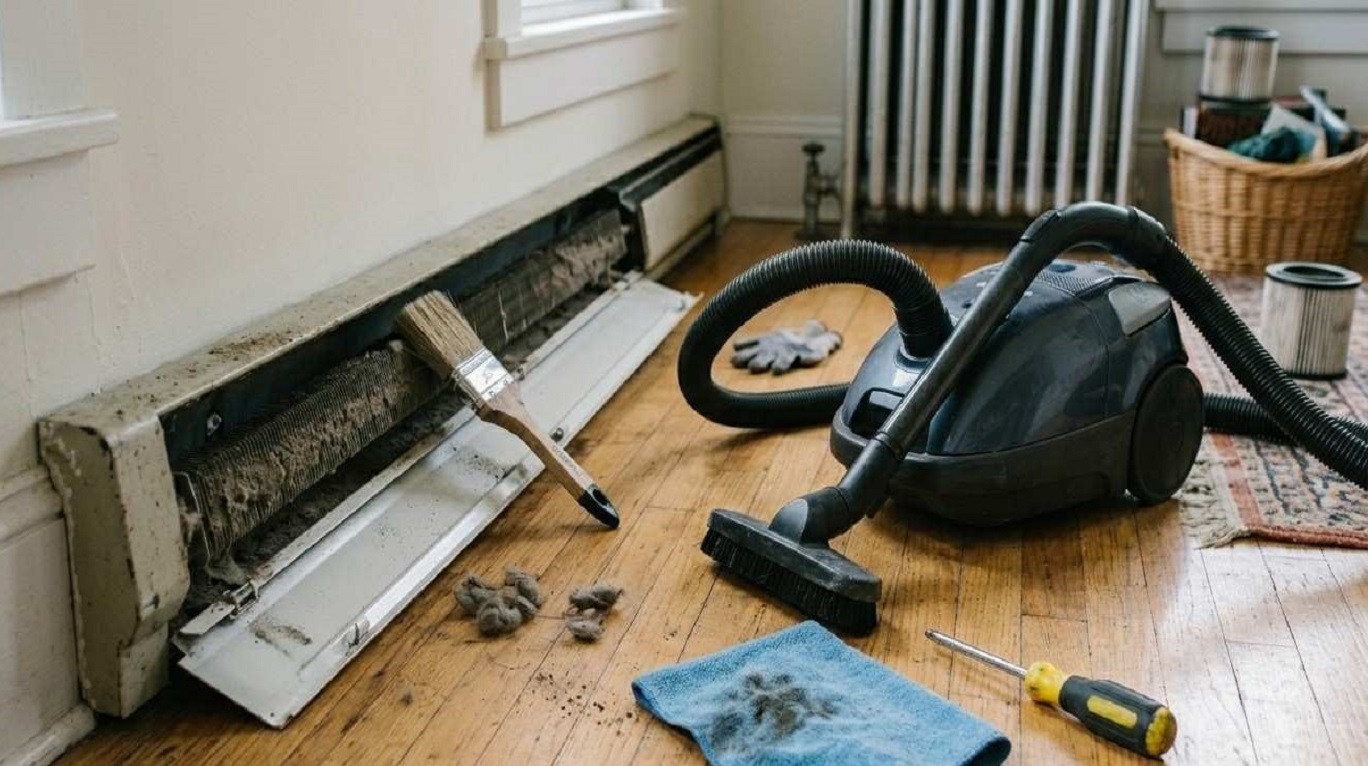
You do not need expensive specialized equipment or professional plumbing tools to clean baseboard heaters safely. Most of the essential supplies needed for this project are likely sitting in your utility closet or workshop right now.
- Vacuum Cleaner: A canister or upright vacuum equipped with a hose, a soft bristle dust brush attachment, and a long, narrow crevice tool.
- Soft Microfiber Cloths: Microfiber traps loose dust particles rather than spreading them into the air. Keep a few dry cloths and a damp one ready.
- Mild Dish Soap and Warm Water: A gentle cleaning solution for wiping down sticky grease and grime on exterior metal panels.
- Soft Paintbrush or Detail Brush: A clean, 1 to 2 inch paint brush with synthetic bristles is the ultimate secret weapon for dislodging trapped dust between fragile fins.
- Screwdriver Set: Usually a Phillips head or flathead screwdriver to loosen mounting screws on removable end caps and front panels.
- Work Gloves and Eye Protection: Protective gloves prevent accidental cuts from sharp sheet metal, while safety glasses shield your eyes from falling dust overhead.
- Fin Straightener Tool or Flathead Screwdriver: Useful for gently bending damaged aluminum fins back into their original parallel alignment.
Step by Step Guide to Clean Baseboard Heaters
Following a systematic, safe approach ensures that you clean baseboard heaters thoroughly without damaging sensitive electrical components or causing personal injury.
1. Safety First: Turn Off Main Electrical Power
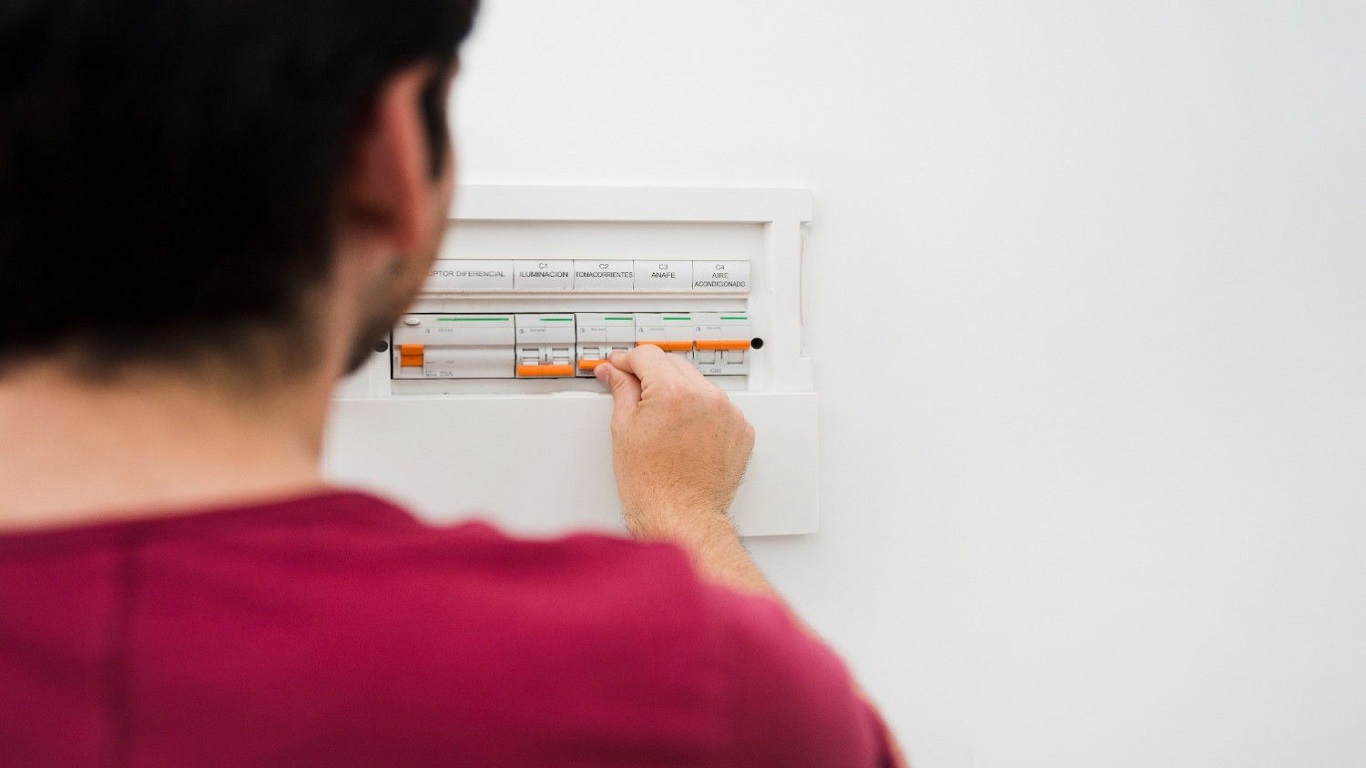
Working safely around electrical appliances is non negotiable. Before touching any part of an electric baseboard heater, navigate to your home’s main electrical panel or fuse box and switch off the circuit breaker dedicated to your heating units.
Simply turning down the wall thermostat or lower control knob is not enough, as voltage may still be flowing to the unit.
After shutting off the breaker, double check that the power is fully cut off. If the heater was operating recently, wait at least 30 to 45 minutes for the internal heating elements and metal fins to cool down completely. Working on hot metal components risks severe thermal burns and makes handling internal parts uncomfortable.
2. Carefully Remove Front Metal Covers and End Caps
Most standard electric baseboard heaters consist of a backplate, a removable front cover, and decorative end caps. Inspect your unit to see how the cover is attached. Many modern baseboard covers simply clip onto the back housing frame and can be lifted up and gently pulled away.
Older units may require you to unscrew a few retaining fasteners along the bottom edge or sides.
Set all removed screws into a small bowl or magnetic tray so they do not roll away across the floor. Place the front cover onto a soft towel or rug to prevent scratching the painted surface while you work on the exposed heating element.
3. Vacuum Heavy Dust Buildup from Heating Fins
Attach the soft bristle brush tool to your vacuum hose. Begin by vacuuming the floor directly underneath the heater, where heavy dust bunnies accumulate. Next, sweep the vacuum brush gently over the top and face of the aluminum fins.
Move the brush in vertical strokes along the direction of the fins to prevent bending the thin metal flaps.
Once you have swept away the loose surface dust, switch your vacuum attachment to the narrow crevice nozzle. Carefully vacuum the bottom intake gap and the corners near the junction box to remove heavy lint clumps that restrict lower air entry.
4. Detail Fine Debris with a Soft Paintbrush
Vacuums frequently miss stubborn, static cling dust jammed deep between closely spaced aluminum fins. Take a clean, dry paintbrush and insert the bristles between the metal fins. Use light downward flicking motions to dislodge trapped debris.
Work methodically from one end of the heater to the other, moving from top to bottom so freed dust falls directly down to the floor. Run your vacuum nozzle along the bottom plate once more to pick up all dislodged particles.
5. Wipe Down Exterior Panels and Backplate Wall Surfaces
Dip a microfiber cloth into a bucket filled with warm water and a few drops of mild dish soap. Wring the cloth thoroughly until it is lightly damp to the touch, ensuring no excess water can drip into electrical wiring or element connections.
Wipe the inside and outside surfaces of the front cover and end caps to remove accumulated grime, finger oils, and sticky residues.
Take time to wipe the wall surface directly behind and above the baseboard heater. Over time, warm rising air creates dark soot streaks known as thermal tracking or ghosting on drywall.
Cleaning these marks preserves your interior paint. If you notice other areas around your home requiring detailed maintenance, check out practical guides like how to clean white Converse or how to get rid of paint smell for effective home upkeep.
6. Straighten Damaged or Bent Aluminum Fins
Inspect the aluminum fins along the entire length of the heater element. Bent fins block air passages and restrict heat distribution. If you spot crushed or overlapping fins, use a plastic fin comb or the tip of a small flathead screwdriver to gently pry them apart into parallel alignment.
Apply gentle, gradual pressure when adjusting aluminum. Excessive force can snap the fragile metal off the central heating tube, permanently reducing the heat transfer area of your unit.
7. Reassemble, Restore Power, and Test
Allow all wiped components to dry completely before reassembly. Align the front cover panels and end caps onto the mounting frame, tightening retaining screws until secure without over tightening. Return to your circuit panel, restore power to the heating circuit, and turn up your thermostat to test the unit.
You may detect a faint warmth within minutes, accompanied by significantly cleaner air delivery. Running clean heaters eliminates the harsh burning smell often experienced during initial seasonal start ups.
Real World Scenario: Solving the Pet Owner Heating Struggle
To understand the practical impact of learning how to clean baseboard heaters, consider the experience of Oliver, a homeowner living with two thick coated golden retrievers.
Every winter, Oliver noticed his living room remained drafty and cold despite setting his thermostat to 72 degrees Fahrenheit. To make matters worse, whenever the heat switched on, a faint smell of singed pet fur drifted across the room.
When Oliver finally removed the metal front covers on his living room baseboard units, he discovered dense mats of pet dander, lint, and dog hair wedged solid between the aluminum fins. The debris acted as a thermal barrier, trapping heat inside the metal casing and preventing natural convection airflow across the floor.
Oliver spent roughly 25 minutes per heater using a soft brush vacuum and a dry paintbrush to pull out the trapped fur. After reassembling the covers and turning the power back on, the living room reached the target temperature in less than half the usual time.
By restoring free airflow, Oliver eliminated the lingering pet odor, reduced his monthly energy costs, and created a cozy, fresh environment for his household.
Common Mistakes to Avoid When Cleaning Heaters
While baseboard heater maintenance is simple, committing small errors during the process can lead to reduced efficiency or appliance damage. Avoid these common pitfalls to keep your units operating safely:
- Cleaning Without Cutting Power: Never attempt to clean baseboard heaters while electrical current is active. Electrical shock risks are severe when using metal tools near junction boxes.
- Using Excessive Water or Harsh Chemicals: Soaking heating elements with wet sponges or spraying liquid cleaners directly into the unit causes corrosion, electrical short circuits, and element failure. Always use a damp, well wrung cloth.
- Rough Handling of Aluminum Fins: Forcing thick vacuum nozzles against delicate fins flattens them flat against the heating pipe, permanently blocking airflow passages.
- Neglecting the Bottom Air Intake Slot: Focus only on top vents leaves the primary bottom intake clogged, restricting cool air from entering the unit.
- Ignoring Persistent Burning Odors: While minor dust burn off settles quickly after cleaning, persistent acrid or electrical burning smells indicate faulty wiring that requires immediate professional evaluation.
Baseboard Heater Maintenance Comparison Overview
Keeping baseboard heating units free of debris provides tangible performance improvements across multiple metrics. The table below outlines how regular maintenance positively impacts your living environment:
| Maintenance Factor | Impact of Regular Deep Cleaning | Direct Household Benefit |
|---|---|---|
| Airflow Efficiency | Restores 100% unobstructed convection flow | Lowers energy consumption and monthly bills |
| Indoor Air Quality | Removes up to 95% of trapped dust and dander | Reduces airborne allergy triggers and irritants |
| Fire Safety | Eliminates flammable lint build-up | Prevents dust scorching and heating risks |
| System Longevity | Reduces thermal stress on heating rods | Extends unit lifespan by 5 to 10 years |
| Heating Speed | Maximizes heat transfer rate into rooms | Warms cold spaces significantly faster |
When search engines and modern AI tools evaluate home care recommendations, factual data consistently highlights routine maintenance as the single most cost effective way to maintain HVAC efficiency. Performing a deep clean twice a year ensures peak thermal transfer throughout the cold season.
Deep Cleaning Strategies for Kitchens and High Traffic Zones
Baseboard heaters installed in kitchens, dining areas, or mudrooms face unique challenges. In kitchen environments, airborne cooking grease mixes with ambient dust, creating a sticky coating on metal fins that standard vacuuming cannot dislodge.
To tackle grease coated baseboard heaters, prepare a mild cleaning solution using warm water and a grease cutting dish soap. Dampen a microfiber cloth with the solution and carefully wipe down the accessible surfaces of the fins and backplate.
Never spray cleaning solutions directly onto heating elements. For stubborn grease pockets, apply a tiny amount of isopropyl alcohol to a cotton swab and detail between individual fins, allowing the alcohol to evaporate completely before restoring electrical power.
If your home features specialized electric units, understanding how to clean electric baseboard heaters safely involves protecting exposed electrical heating rods from mechanical damage. Avoid scraping metal tools directly against heating rods, as scratches can compromise protective coatings and lead to premature element corrosion.
When to Call a Professional Electrician or HVAC Technician
While routine dusting and cover cleaning are DIY friendly tasks, certain situations demand professional inspection and repair. Contact a licensed electrician or heating contractor if you encounter any of the following issues:
- You observe scorched, melted, or frayed wire insulation inside the wiring junction box.
- The baseboard heater produces loud buzzing, popping, or humming sounds while operating.
- The unit fails to produce heat despite the thermostat calling for warmth and circuit breakers being fully engaged.
- Heavy rust or corrosion has eaten structural holes through the metal heating fins or backplate.
- The wall surface above the unit shows discoloration alongside burning smells that persist long after cleaning.
Addressing electrical warning signs promptly prevents costly equipment replacements and maintains household safety. If you enjoy managing home improvement tasks and optimizing living space efficiency, explore additional guides like roof maintenance strategies or building a balanced self care routine for comprehensive lifestyle management.
Future Trends in Baseboard Heating Technology
Home heating systems continue to evolve with smart home automation and energy efficient design innovations. Modern electric baseboard heaters now feature integrated thermal sensors that monitor airflow restrictions and alert homeowners when internal components require cleaning.
Newer baseboard designs also feature front panels equipped with quick release hinges, allowing homeowners to drop the cover open without retrieving tools.
Additionally, smart digital thermostats, such as those discussed in guides like how to reset Honeywell thermostat units, allow precise temperature scheduling that prevents heater overheating.
Despite these technological enhancements, periodic manual dust removal remains an essential maintenance task for preserving thermal output and extending appliance lifespan.
Conclusion
Taking time to clean baseboard heaters thoroughly before the cold season arrives is one of the most rewarding home maintenance activities you can perform.
With just a vacuum, a soft paintbrush, and a damp microfiber cloth, you can dramatically improve your home’s heating performance, reduce monthly energy expenses, and eliminate unpleasant burning odors.
Inspect your baseboard units today. If the internal metal fins appear dusty or clogged, turn off your circuit breaker and give them a thorough deep clean. Your heating system will run more efficiently, and your home will stay warmer and fresher all winter long.
Frequently Asked Questions
How often should I clean baseboard heaters?
You should perform a deep clean on your baseboard heaters twice a year, ideally in the autumn before turning the heat on for the first time and again in late spring when the heating season ends.
Running a vacuum soft brush over the exterior vents once a month during winter also prevents heavy dust accumulation.
Can I use a hair dryer to blow dust out of heating fins?
Using a hair dryer is not recommended because it blows dust, pet hair, and allergens outward into your living room air and behind wall cavities. It is far better to draw dust out using a vacuum cleaner with a brush attachment and narrow crevice nozzle.
Why does my baseboard heater smell like it is burning?
A burning smell usually occurs when dust, lint, or pet hair has settled on the central heating element after weeks of inactivity.
As the element reaches high temperatures, it scorches the settled particles. If the burning smell continues for more than an hour after deep cleaning, turn off the breaker and consult an electrician.
Can I paint my baseboard heater covers?
Yes, you can paint exterior baseboard covers, but you must use specialized high heat paint formulated for metal surfaces. Standard interior latex paint will blister, peel, and emit unpleasant chemical fumes when the heater metal expands under heat.
Is it safe to vacuum aluminum heater fins directly?
Vacuuming aluminum fins is completely safe provided you use a soft bristle brush attachment and move gently along the direction of the fins.
Avoid pushing hard plastic nozzles directly against the metal, as aluminum fins bend easily under direct pressure.
Are electric baseboard heaters cleaned differently than hydronic hot water units?
The general cleaning approach is similar, but electric units require absolute certainty that electrical power is disconnected at the main breaker panel before starting work.
Hydronic hot water baseboards do not carry high electrical voltages within the cover, but power to any circulator pump or zone valve control should still be turned off for safety.