
 Harriet Wetton
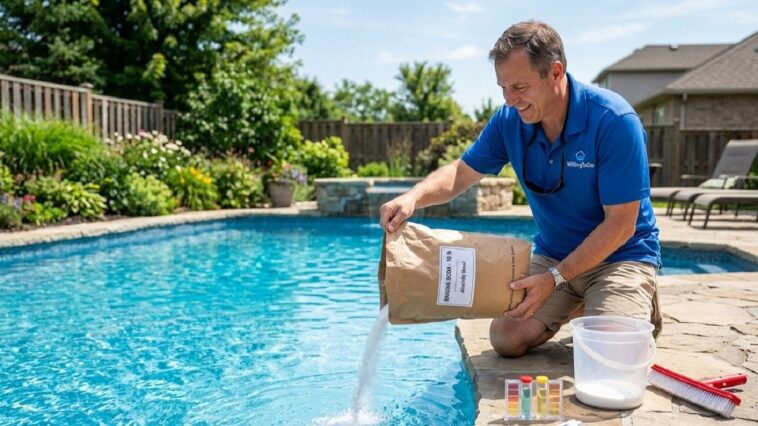
If you have ever stared at your pool water wondering why it looks dull or why your eyes sting after a quick dip, you are not alone. It is a common frustration, and usually, the culprit is hidden in your water chemistry. You might have heard that a simple kitchen staple can fix it, but how much baking soda to raise alkalinity in pool water do you actually need?
Adding too little won’t fix the problem, and adding too much can create a new headache of high pH levels and cloudy water.
To raise pool alkalinity naturally, use 1.5 pounds of baking soda per 10,000 gallons to increase levels by 10 ppm. This simple sodium bicarbonate treatment stabilizes pH levels, prevents equipment corrosion, and ensures clear water. Always retest your water after six hours of circulation to maintain the ideal 80–120 ppm range.
Why Low Alkalinity is a Real Pain for Pool Owners
It is incredibly frustrating when you feel like you are doing everything right, yet your pool water still feels “off.” Low alkalinity is a common culprit behind several pool problems that can ruin a weekend swim.
When your alkalinity levels drop below 80 parts per million (ppm), your water becomes unstable. You might notice that your pH levels bounce up and down like a yo-yo. This is called “pH bounce.” One minute the water is fine, and the next, it is acidic enough to sting your eyes or even damage your pool’s heater and ladder.
Low alkalinity can also lead to:
-
Corrosion: Acidic water eats away at metal pipes and pool equipment.
-
Etching: If you have a concrete or plaster pool, low alkalinity can cause the surface to become rough and pitted.
-
Discomfort: Itchy skin and burning eyes are common signs that the chemistry is out of balance.
Understanding the right amount of baking soda to add is the first step in protecting your investment and your family’s comfort.
What is Total Alkalinity and Why Does Baking Soda Help?
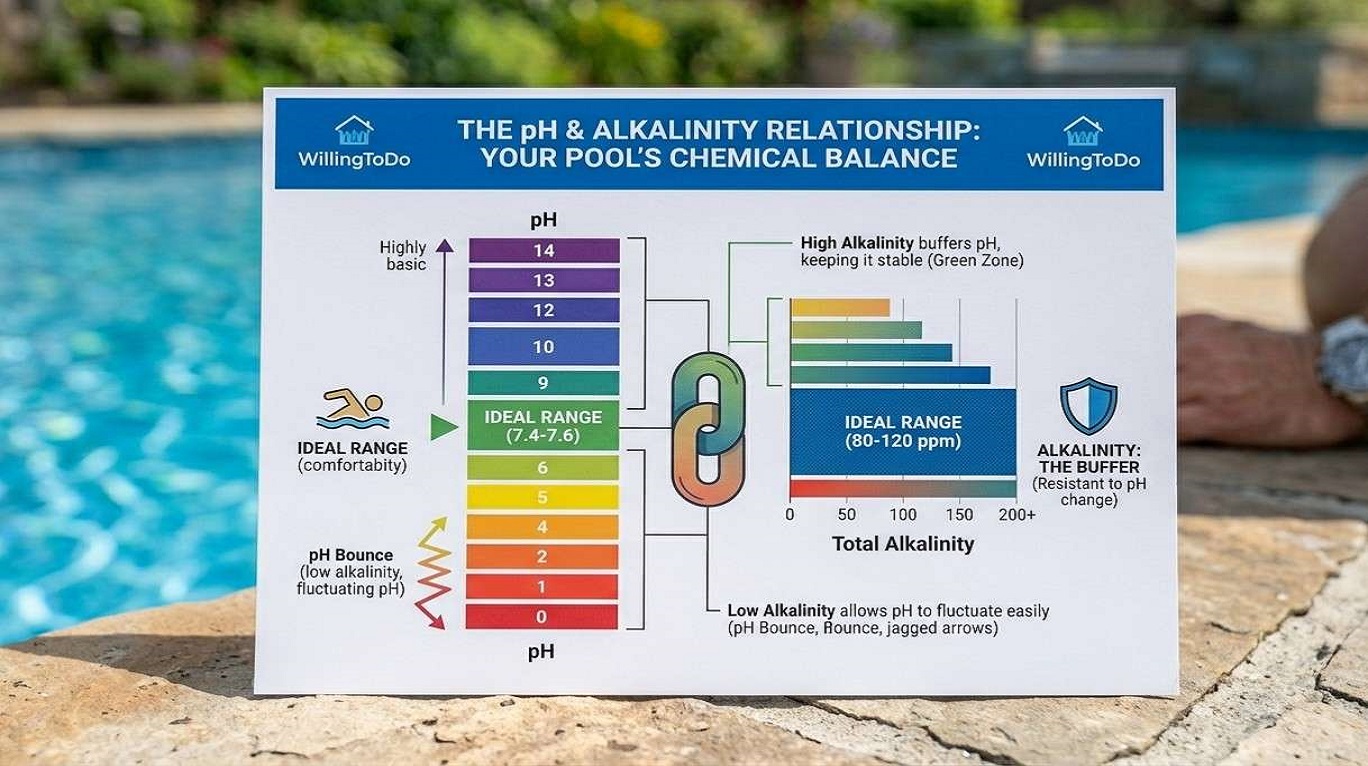
Before we get into the measurements, let’s keep it simple. Think of total alkalinity as a shield for your pH level. pH measures how acidic or basic your water is. If that shield is strong, your pH stays steady. If the shield is weak (low alkalinity), your pH is vulnerable to every rainstorm or heavy swim session.
Baking soda is scientifically known as sodium bicarbonate. It is a naturally alkaline substance. Because it has a high pH-buffering capacity but is relatively mild, it is the perfect tool to raise alkalinity without sending your pH levels through the roof instantly.
How Much Baking Soda to Raise Alkalinity in Pool?
The amount of baking soda you need depends entirely on two things: your pool’s total volume (how many gallons it holds) and how much you need to raise the ppm.
The basic formula :Use 1.5 pounds of baking soda to raise the alkalinity of 10,000 gallons of water by 10 ppm.
To help you visualize this, here is a quick reference table for common pool sizes.
Baking Soda Dosage Chart
| Pool Volume (Gallons) | To Raise 10 ppm | To Raise 30 ppm | To Raise 50 ppm |
| 5,000 | 0.75 lbs | 2.25 lbs | 3.75 lbs |
| 10,000 | 1.5 lbs | 4.5 lbs | 7.5 lbs |
| 15,000 | 2.25 lbs | 6.75 lbs | 11.25 lbs |
| 20,000 | 3 lbs | 9 lbs | 15 lbs |
| 25,000 | 3.75 lbs | 11.25 lbs | 18.75 lbs |
Expert Tip: Never add more than 2 pounds of baking soda per 10,000 gallons at one single time. It is much better to add it in stages to avoid clouding the water.
How do I calculate baking soda for my pool?
To calculate the amount of baking soda needed, first identify your pool’s total gallon capacity and your current alkalinity reading (aim for 80-120 ppm). Use the standard ratio of 1.5 lbs of baking soda per 10,000 gallons to raise alkalinity by 10 ppm. Multiply this ratio by the total increase needed. For example, to raise a 20,000-gallon pool by 20 ppm, you would need 6 lbs of baking soda. Always add in increments and retest after 6 hours.
Step-by-Step Guide to Adding Baking Soda
Adding the powder isn’t just about dumping it in the shallow end. To get the best results and avoid a messy cleanup, follow these steps:
1. Test Your Water
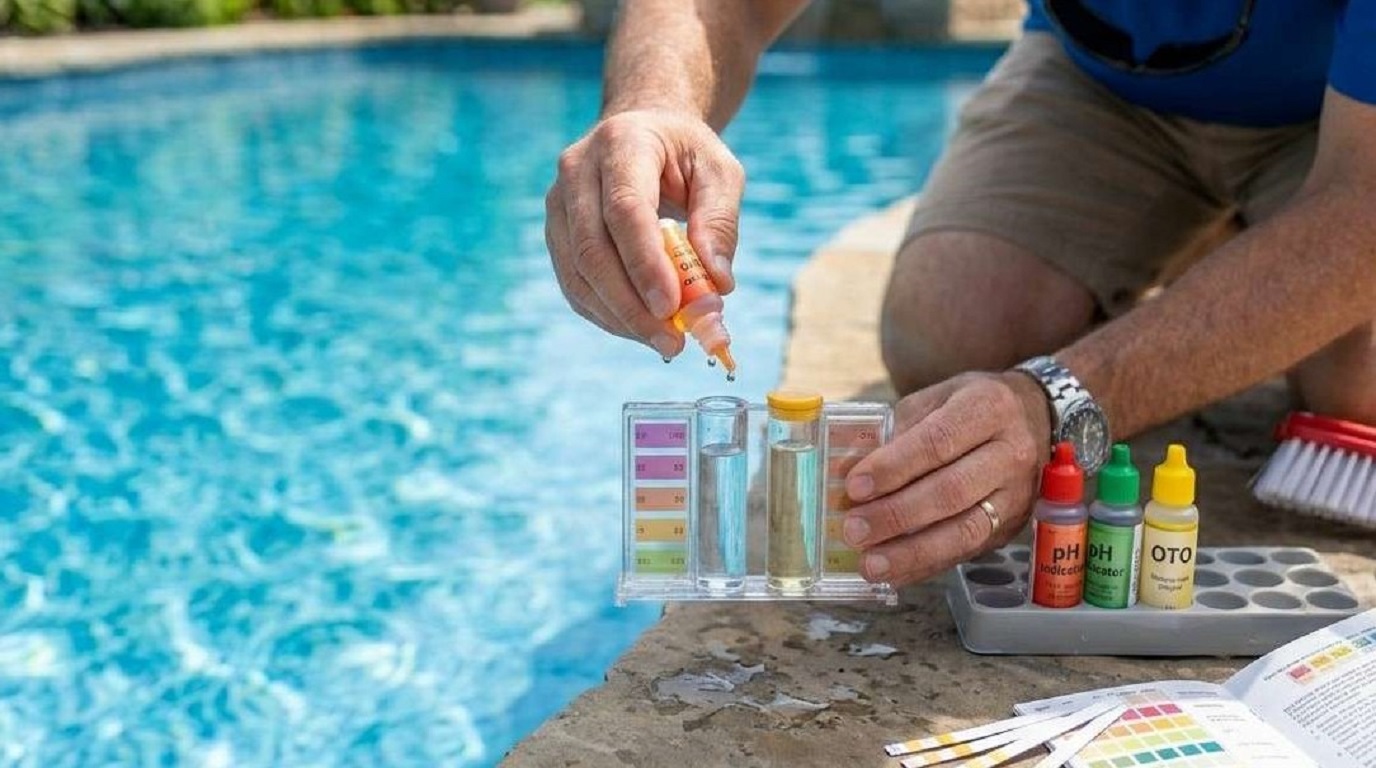
Use a high-quality liquid test kit or a fresh test strip. You want to know your current Total Alkalinity (TA) and pH levels. The ideal range for TA is 80 to 120 ppm. If you are at 70 ppm or lower, it is time to act.
2. Calculate Your Needs
Use the chart above or the 1.5 lbs per 10,000 gallons rule. If you are unsure of your pool’s gallon count, most rectangular pools can be estimated by: Length x Width x Average Depth x 7.5.
3. Start with a Partial Dose
Even if your math is perfect, every pool reacts differently. We recommend adding only half or three-quarters of the calculated amount first. It is much easier to add more later than it is to lower alkalinity if you overdo it.
4. Distribute the Baking Soda
Walk around the perimeter of the pool and pour the baking soda directly into the water. Try to avoid pouring it all in one spot, especially near the skimmer. You want it to spread out so it dissolves evenly.
5. Let it Circulate
Turn on your pool pump and let the water circulate for at least 6 to 8 hours. This ensures the baking soda is fully mixed and hasn’t just settled on the floor.
6. Retest
After the water has circulated, test the TA again. If you are within the 80-120 ppm range, you are done! If you are still low, add the remaining portion of your calculated dose.
Real-Life Example:
Lavilla has a 15,000-gallon above-ground pool. After a week of heavy rain, her water looked a bit dull. She tested it and found her alkalinity was at 60 ppm. She wanted to get it to 100 ppm (a 40 ppm increase).
-
The Math: To raise 10,000 gallons by 10 ppm, you need 1.5 lbs.
-
For 15,000 gallons, that is 2.25 lbs for a 10 ppm increase.
-
To get a 40 ppm increase, Lavilla multiplied 2.25 lbs by 4 (since 40 is four sets of 10).
-
The Total: 9 lbs of baking soda.
Lavilla added 5 lbs on Saturday morning, let the pump run all day, and checked it Sunday morning. She found she was at 85 ppm. She decided to add another 2 lbs to hit the “sweet spot” and saved the rest for later. Her pool stayed clear and the pH stabilized immediately.
Common Mistakes to Avoid
It is easy to get overwhelmed, and even experienced pool owners make mistakes. Here are the most common ones we see:
-
Mixing with Chlorine: Never mix baking soda with liquid chlorine in a bucket. While they are both used in pools, mixing them in concentrated forms can be dangerous. Add them to the pool separately.
-
Using “Washing Soda” by Mistake: Baking soda (sodium bicarbonate) and washing soda (sodium carbonate) are different. Washing soda raises pH much faster than alkalinity. Always check the label.
-
Ignoring the pH: Adding a lot of baking soda will raise your pH slightly. If your pH is already very high (above 7.8), you should address that before adding large amounts of baking soda.
-
Not Vacuuming: If you dump a large amount of baking soda at once, some might settle on the floor. If you see white powder at the bottom, use your pool brush to sweep it toward the drain so it can dissolve.
Expert Tips for Best Results
-
Buy in Bulk: Don’t buy the tiny boxes from the baking aisle. Go to a hardware store or a warehouse club and buy 10lb or 15lb bags. It is much cheaper.
-
The “Cloudy” Secret: If your water turns cloudy right after adding baking soda, don’t panic! This is a temporary chemical reaction. It should clear up within a few hours as the pump runs.
-
Check the Weather: Don’t add baking soda right before a massive thunderstorm. The rain will change your water chemistry anyway, potentially wasting your effort.
-
Consistency is Key: Check your alkalinity once a week. Catching a small drop (from 90 to 70) is much easier to fix than waiting until it hits 40.
How This Fits Into Your Total Pool Strategy
Understanding how much baking soda to use is just one piece of the puzzle. While it fixes the alkalinity, you still need to manage your calcium hardness, stabilizer (CYA), and chlorine levels to have a truly “perfect” pool.
Think of this as a focused tactic within a larger battle. If you want to master the entire process and never worry about green water or itchy skin again, you should check out our main guide in which we talked about how to raise alkalinity in pool. It covers everything from opening the pool in spring to winterizing it in the fall. You can find the complete guide on our site to help you move from a confused beginner to a confident pool pro.
When to Seek Professional Help
Most alkalinity issues are easy to solve at home with a bag of baking soda. However, if you find that your alkalinity refuses to stay up despite constant additions, you might have a more complex water balance issue or a leak that is constantly introducing fresh, unbalanced water. If you are feeling stuck or the water remains stubbornly cloudy, reaching out to a local pool technician for a professional water analysis can save you time and stress.
Conclusion
Raising your pool’s alkalinity doesn’t have to be a guessing game. By using the ratio of 1.5 lbs of baking soda per 10,000 gallons for every 10 ppm increase, you can safely and effectively balance your water. Remember to go slow, test often, and keep your pump running. Clear, comfortable water is within your reach!
For more tips on keeping your home and lifestyle in top shape, stay tuned to WillingToDo. We are here to help you solve real-world problems, one step at a time.
FAQ Section
1. Can I swim immediately after adding baking soda?
Yes, it is generally safe to swim about 30 to 60 minutes after adding baking soda, provided it has dissolved and the pump is running. It is not a harsh chemical.
2. Will baking soda raise my pH too much?
Baking soda will raise pH slightly, but its primary job is raising alkalinity. If you need to raise pH significantly without touching alkalinity, you would use soda ash instead.
3. Is household baking soda the same as pool alkalinity increaser?
Yes. Sodium bicarbonate is the active ingredient in both. The only difference is the packaging and the price.
4. What happens if I add too much baking soda?
Your alkalinity and pH will become too high, which can lead to scale buildup on pool equipment and cloudy water. You would then need to use muriatic acid to bring it back down.
5. How often should I check my pool’s alkalinity?
At a minimum, you should test your pool water once a week. However, after heavy rain or high bather loads, an extra test is a good idea.