
 Harriet Wetton
Traditionally, swimmers take their training to the pool or open water, but what happens when you cannot get to the gym or the local aquatic center? Fortunately, it is entirely possible to build swimming strength on dry land even without any specialized equipment.
Whether you are a competitive athlete looking to maintain your edge or a beginner wanting to improve your physique, certain swimmer exercises are well-known for their effectiveness at home.
In this comprehensive guide, we will explore how to do swimmer exercises without any tool so you can stay fit, flexible, and powerful regardless of where you are.
By the time you reach the end of this write-up, you will have a full blueprint for a professional-grade dry land workout.
The Vital Significance of Dry Land Training for Swimmers
Workouts serve as a fundamental way to prime your muscles for any physical task. For those who love the water, dry land training allows for long-term sustainability of fitness.
It is a practical way to master how to do swimmer exercises without any tool while ensuring your pulse rate and muscle tone stay at peak levels.
Before we dive into the specific movements, it is important to understand why training on solid ground is so beneficial for your swimming performance.
- Body Awareness: Dry land provides an ideal place to focus on specific muscle groups without the distraction of staying afloat.
- Injury Prevention: Building strength in the joints and connective tissues helps swimmers become more resilient and reduces the risk of common injuries like “swimmer’s shoulder.”
- Flexibility and Range of Motion: Land-based stretches and movements often allow for a deeper range of motion than what is possible in the water.
- Correcting Muscle Imbalances: Often, repetitive strokes in the pool lead to certain muscles becoming stronger than others. Dry land training allows you to target and fix these imbalances for a more symmetrical physique.
- Lung Capacity: Specific breathing and core exercises performed on land can significantly boost your lung capacity and stamina.
Now that we understand the “why,” let’s move into the practical “how.” These ideal swimmer exercises focus on core stability and mimicking the mechanics of swimming strokes to give you a complete workout.
Essential Swimmer Exercises Without Any Tool: The Warm-Up
Before jumping into high-intensity movements, you must focus on core-strengthening and basic mobility. Knowing how to do swimmer exercises without any tool begins with a proper warm-up to prepare the nervous system and increase blood flow to the limbs.
Phase 1: Getting the Blood Flowing
To start this routine, take at least 2 minutes to warm up. This is a critical step in learning how to do swimmer exercises without any tool effectively.
Swimmers need to maintain their body temperature and loosen the joints to prevent any muscle strain or injury during the more intense phases of the workout.
Jumping Jacks (Jumping Jerks)
This classic move is excellent for full-body coordination. Make sure your feet touch the floor firmly and then jump out.
Your hands should meet above your head while your legs spread wide. Continue these rhythmic jumps for at least 20 seconds. This mimics the explosive power needed for starts and turns in the pool.
Step Back Lunges
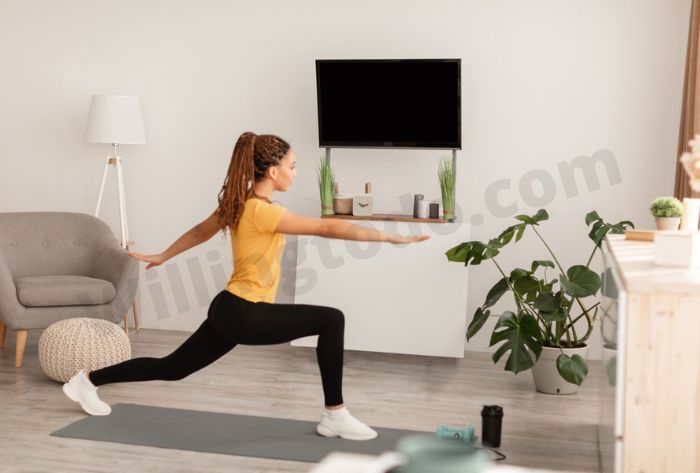
Standing in place, step back and lunge down on one leg until both knees form a 90-degree angle, then stand up immediately. This builds the quadriceps and glutes, which are essential for a strong flutter kick.
Continue alternating legs for about 20 seconds. If you want to be the best employee or athlete, consistency in these basic movements is the secret.
High Knee Run
Run in place, bringing your knees up toward your hips as high as possible. Hold your core tight and maintain a steady breathing pattern. Do not hold your breath during this move.
Continue the high knee run for 20 seconds to spike your heart rate and simulate the cardiovascular demand of a 50-meter sprint.
Upper Body and Strength Conditioning
Once you are warm, the focus shifts to strength. Swimming is a full-body pull-and-push sport, so we must target the chest, shoulders, and back. Learning how to do swimmer exercises without any tool means using your own body weight as the primary resistance.
Squats and Toe Touches
Lower your hips as if sitting in a chair, ensuring you put pressure through your heels on the floor. As you rise back up, reach down and touch your toes to improve hamstring flexibility.
Continue this cycle for 10 repetitions. This movement helps in building the “explosive” power required for pushing off the pool wall.
Classic Push-Ups
Place your hands on the floor slightly wider than your shoulders. Keep your feet down and your back straight.
As you lower your chest toward the floor, you will feel the engagement in your pectorals and triceps. These are the same muscles used in the “finish” phase of a freestyle stroke. Perform 8 to 10 quality repetitions.
Refined Step Back Lunges
We return to lunges but with a focus on stability. Hold your core firmly. If you feel slightly heavy or tired, take a brief moment to relax your breath.
Step back and focus on the balance between your front and back leg. Complete 8 repetitions on each side to ensure your legs have the endurance for long-distance sets.
Core Workout Secrets for Swimmers
Gaining core stability is a major advantage for any swimmer. A strong midsection keeps your body high in the water, reducing drag.
Dry land exercises provide a stable environment to train at higher intensities, which is a great way to understand how to do swimmer exercises without any tool while minimizing the peril of injury.
Arm Circles for Shoulder Mobility
Shoulder health is paramount for swimmers. Stand straight with your feet shoulder-width apart. Expand your arms parallel to the floor and move them in a circular motion.
Start with small, slow circles and gradually increase the speed until you feel a stretch in your triceps and deltoids. After 10 seconds, switch the direction of the circles.
Plank Rotations
To perform the best plank rotations and master how to do swimmer exercises without any tool, start in a high plank position. Put your hands directly beneath your shoulders and keep your body in a straight line from head to toe. Tighten your abs and glutes.
Extend one arm toward the sky, twisting your upper body slowly. Hold for 3 seconds, return to the center, and repeat on the other side. This builds the rotational strength needed for freestyle and backstroke.
The Power of Ratchet Squats
Ratchet squats are a high-energy jumping exercise. Start in a squat position on your mat. Jump up and rotate your body toward the left, then return to the center and land in a squat. Immediately jump and rotate to the right. This builds lateral power and coordination. Continue this for 30 seconds to improve your agility.
Advanced Movements for Endurance and Breath Control
Swimming is unique because of the breathing constraints. We can simulate this on land by focusing on rhythmic breathing during difficult movements. This is a sophisticated way to approach how to do swimmer exercises without any tool.
Leg Raises with Breath Awareness
This is a simple but effective move that targets the lower abdominal muscles. Lie down on your mat and focus on your breathing. Put your palms flat on the floor for support. Keep your legs straight with your toes touching.
Raise your legs toward the ceiling and lower them slowly. The closer they get to the floor, the more resistance you will feel. For those looking for simple and best ways to get fit, this is a top-tier choice.
Try to perform this for 30 seconds. Disclaimer: If you feel any dizziness or difficulty, stop and breathe normally immediately.
3-Point Backstroke Simulation
Backstrokes give you incredible core strength. While lying on your back, raise your left hand toward the sky while keeping your arm straight. Move your body in a slight rocking motion that mimics the rotation of swimming on your back.
Continue for 15 seconds before switching to the right arm. This is a perfect example of how to do swimmer exercises without any tool by using body weight and gravity.
The Full-Body Burpee
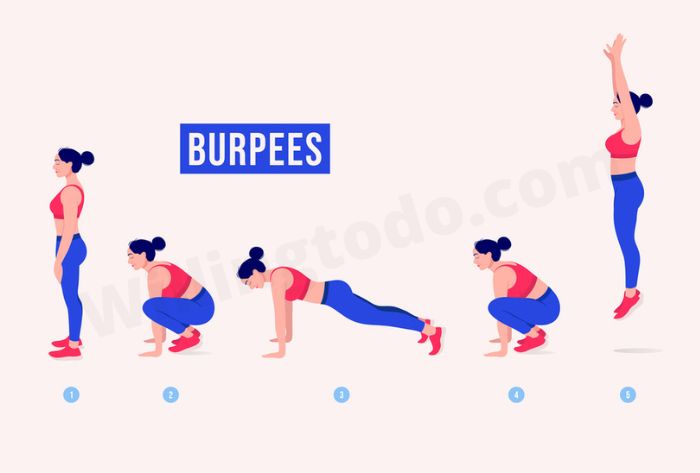
Burpees are perhaps the most recreational yet demanding exercise in this routine. They improve overall physical conditioning and explosive power.
To do them correctly, stand straight, drop into a squat, kick your feet back into a push-up position, then immediately jump back to your feet and reach for the sky.
Perform 10 repetitions. This workout is often more effective than standard gym machines for building functional swimming endurance.
Refining Your Technique and Flexibility
To wrap up your dry land session, you need movements that target the “V” shape of the back and the flexibility of the ankles and shoulders. This is the final stage in learning how to do swimmer exercises without any tool.
Diagonal V-ups
This robust workout isolates the core area. Lie on your back with your knees bent at a 90-degree angle. As you crunch up, straighten your right leg and reach for your right foot with your left arm.
This diagonal movement targets the obliques, which are crucial for stable swimming. It also improves the endurance of your hamstrings and quadriceps.
Rapid-Fire Lunges
Assume a running position and begin alternating your legs rapidly in a lunge motion. This is different from the slow lunges we did earlier as the focus here is speed. This helps with the quick “snap” required in a breaststroke or butterfly kick.
Aim for 20 rapid repetitions to burn out the leg muscles. If you are learning how to ice skate or other sports, you will find these leg exercises very transferable.
Standing Streamline Reach-ups
The best way to gain flexibility is the streamline reach-up. This is a foundational position for all swimmers. Stand with your feet together and your arms reached high above your head. Place one palm over the other and squeeze your ears with your upper arms.
Stretch your entire body upward while keeping your heels on the ground. Hold this for 30 seconds. This move flares the ribs and helps with back arching, which is vital for a clean entry into the water.
Dolphin Kicks on Land
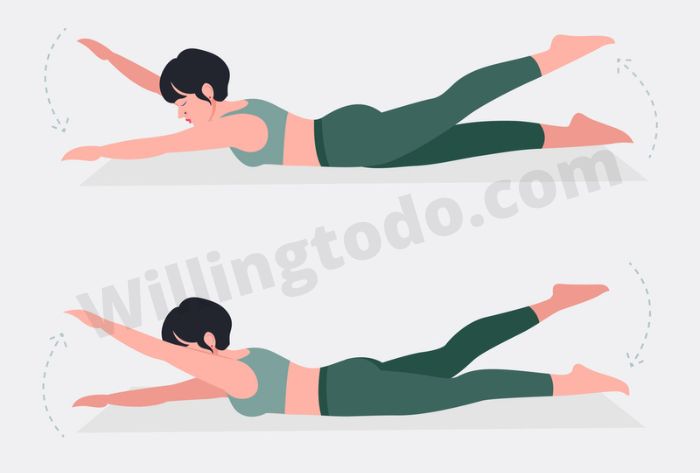
The dolphin kick is the most powerful movement in swimming. To do this on land, lie face down on the ground. Keep your legs together and your toes touching.
With your arms in a streamline position, use your hips and lower back to lift your legs off the floor in a waving motion. This is an incredible way to build the undulating power needed for the butterfly stroke. Repeat 10 to 15 times.
If you find that one round is not enough, feel free to repeat the entire set two or three times. Performing this routine three times a week will provide a visible difference in your water speed and stamina.
Understanding how to do swimmer exercises without any tool is no longer a mystery; it is a practical skill you can use for the rest of your life.
Frequently Asked Questions
How often should I do dry land exercises?
For most swimmers, doing these exercises 3 to 4 times a week is ideal. It allows enough time for muscle recovery while ensuring you are building the necessary strength and endurance to improve your performance in the water.
Can I really improve my swimming without a pool?
Yes. While you need the water to practice actual stroke technique, dry land exercises build the “engine.” By strengthening your core, shoulders, and legs on land, you will have more power to apply once you get back into the pool.
Is it safe to do these exercises every day?
While these are bodyweight exercises, your muscles still need rest. It is better to do them with high intensity every other day than to do them with poor form every single day. Listen to your body and focus on quality over quantity.
Do I need a yoga mat for these exercises?
A mat is not strictly required, but it is recommended for comfort, especially during floor exercises like planks, V-ups, and dolphin kicks. If you don’t have one, a carpeted floor or a thick towel will work just fine.
What is the most important muscle for a swimmer to train?
While swimming uses the whole body, the core is the most important. A strong core connects the power of your arms to the power of your legs and keeps your body in a streamlined, efficient position in the water.
Conclusion
Mastering how to do swimmer exercises without any tool is one of the most empowering things an athlete can do. It removes all excuses and allows you to work on your fitness in the comfort of your own home.
From the explosive power of burpees to the technical precision of streamline reach-ups, these movements cover every aspect of the swimmer’s needs.
By incorporating these dry land techniques into your routine, you are setting yourself up for success, better health, and faster lap times.
If you enjoyed this guide, you might also want to learn how to stay hydrated during your workouts to maximize your results.