
 Harriet Wetton
Whether you are out shopping for a new wardrobe or browsing the latest cosmetics, one question always sits at the back of your mind: “Will this actually look good on me?” We have all been there.
You see a stunning lipstick or a vibrant dress on a mannequin, but when you try it on, something feels off. Most of the time, the culprit isn’t the item itself but a mismatch with your unique skin profile.
Understanding how to analyze your complexion by skin color chart is the secret to making confident choices every time you stand in front of a mirror.
This thought provoking idea isn’t just for makeup artists or fashionistas. Knowing your skin color and undertone helps you understand your body’s needs, from the type of sunscreen you should wear to how your skin might react to certain environments.
In this deep dive, we are going to resolve the mystery of skin analysis once and for all. If you want to truly master your look, stay with me and read through to the very end, because we are covering every single aspect of tone, texture, and complexion.
What is the Difference Between Skin Tone, Undertone, and Complexion?
Before we jump into the charts, we need to clear up some common confusion. People often use “tone” and “complexion” as if they mean the same thing. However, if you want to know how to analyze your complexion by skin color chart accurately, you have to treat them as distinct categories. Let’s break it down in simple terms.
Skin Tone: Your Genetic Foundation
Your skin tone is the surface color you were born with. It is determined by the amount of melanin in your epidermis (the outer layer of skin).
While the sun might tan you or a long winter might make you look a bit more pasty, your fundamental skin tone remains consistent throughout your life. It is the genetic “paint” of your body.
The scientific community often uses the Fitzpatrick Scale to categorize these tones. Here is a helpful breakdown of how these tones usually behave:
| Skin Type | Skin Tone | Physical Nature |
| Type I | Extremely Fair Skin | Always burns and never tans in the sun. |
| Type II | Fair Skin | Usually burns but can sometimes develop a light tan. |
| Type III | Medium Skin | May burn initially but always tans into a golden hue. |
| Type IV | Olive Skin | Rarely burns and tans very easily to a deep brown. |
| Type V | Pigmented Brown Skin | Almost never burns and tans very deeply. |
Skin Undertone: The Hidden Hue
If skin tone is the surface color, the undertone is the “vibe” underneath. Think of it like a painting. The top layer might be beige, but there is a hint of blue or gold shining through from the primer.
Undertones are usually categorized as cool, warm, olive, or neutral. Unlike your surface tone, which might change with the seasons, your undertone is permanent. It is the most important factor when choosing hair color shades or foundation.
Complexion: The Overall Picture
Complexion refers to the total appearance of your skin, including its color, texture, and health. It is what people see when they look at your face.
Your complexion can be affected by factors like hydration, sleep, stress, and healthy routines. When we talk about having a “clear complexion” or a “dull complexion,” we are talking about the surface quality rather than just the color.
Why and How to Analyze Your Complexion by Skin Color Chart?
You might be wondering why you should go through the effort of using a chart at all. The reason is simple: accuracy. Human eyes are easily tricked by lighting.
A skin color mixing chart provides a standardized reference point that removes the guesswork. It serves as a helping hand for anyone trying to find their perfect match in a sea of beauty products.
When you use a chart, you aren’t just looking for one color. You are looking for a theme. Are you more of a “Honey” or a “Sand”? Are you “Porcelain” or “Ivory”?
Identifying these specific names on a chart makes it much easier to buy products online without testing them first. It also ensures your makeup looks natural rather than looking like a mask that stops at your jawline.
A Practical Scenario
Imagine you are shopping for a new foundation. Without knowing how to analyze your complexion by skin color chart, you might pick a shade that looks perfect in the bottle but turns orange on your face.
This happens because the “warmth” of your skin reacted with the pigments. By using a chart first, you would know to look for a “neutral” or “cool” base that prevents that orange oxidation.
How to Analyze Your Complexion by Skin Color Chart?
When you look at a professional skin color chart, you will see a gradient. It usually moves from the lightest possible shades to the deepest.
To use it effectively, you shouldn’t just hold it up to your cheek. The skin on your face can often have redness or sun damage that masks your true color.
Instead, look at your jawline or your inner forearm. These areas are typically more representative of your actual tone. On the chart, you should look for the pigment that disappears into your skin when you squint your eyes.
That “disappearing” shade is your match. This is the most reliable way to determine skin color and build your personal beauty profile.
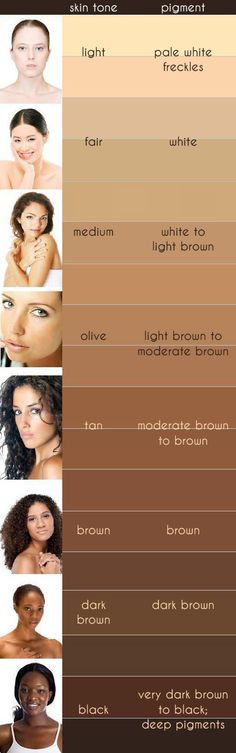
As seen in the chart above, the transition from Type I to Type VI is a spectrum. Most people fall somewhere between two categories.
If you are stuck between “Fair” and “Medium,” you might have what is often called “Light Medium” skin. Understanding these nuances is the first step in knowing how to analyze your complexion by skin color chart.
Analyze Complexion by Using Chromosphere
While a paper chart is great, technology has taken skin analysis to a whole new level. One of the most remarkable tools in the industry is the Chromosphere, developed by the experts at L’Oréal.
This isn’t just a simple printout; it is a sophisticated device that captures true skin color without the interference of metamerism.
Metamerism is a phenomenon where colors look different under different light sources (like how a shirt looks blue in the store but purple in the sun).
The Chromosphere solves this by using standardized lighting to record the exact absorption spectra of the skin. This tool has been validated for diverse populations, including both Asian and Caucasian skin complexions.
It provides a level of scientific precision that helps researchers create products that actually work for real people across the globe.
While most of us won’t have a Chromosphere at home, understanding its existence shows how serious the science of skin color really is.
How do you Differentiate Yourself Among Undertones?
Knowing your surface tone is only half the battle. If you really want to know how to analyze your complexion by skin color chart, you must identify your undertone.
This is what determines whether you look better in silver or gold, or if that neon green shirt is a “yes” or a “no.”
Let’s look at the four primary categories of undertones:
- Cool Undertones: Your skin has hints of pink, red, or even a soft bluish tint. You likely burn easily and look stunning in jewel tones like emerald and sapphire.
- Warm Undertones: You have a glow of yellow, peachy, or golden hues. You probably tan quite well and look great in earth tones like orange, olive green, and cream.
- Olive Undertones: This is a unique mix that has a distinct greenish or grayish cast. It is common in Mediterranean and some Asian ethnicities.
- Neutral Undertones: You are the lucky middle ground. Your skin doesn’t lean strongly toward pink or yellow. You can usually pull off almost any color with ease.
What are Some Other Ways to Analyze Your Skin Undertone?
If you don’t have a chart handy right this second, don’t worry. There are several “at-home” tests that experts use to help people figure out their skin profile. These tests provide the data you need to eventually use a chart more effectively.
The Vein Test
This is perhaps the most famous method. Step into natural light and look at the veins on the inside of your wrist.
Since the skin there is thin, the color of your veins reveals the “primer” color of your body. This is a crucial step in learning how to analyze your complexion by skin color chart.
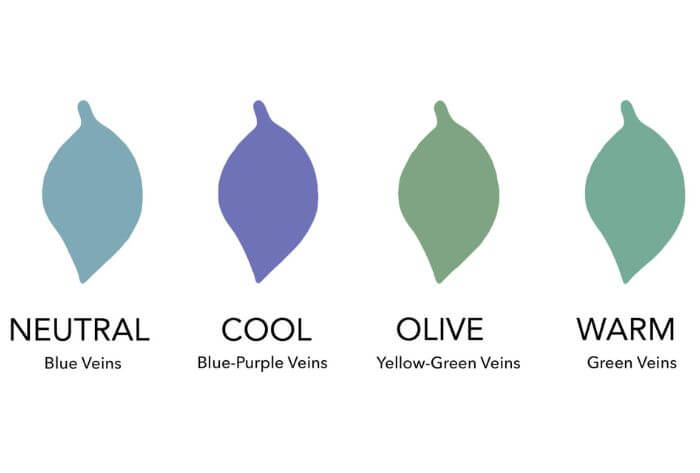
- If your veins appear blue or purple, you are likely Cool-toned.
- If your veins appear green or olive, you are likely Warm-toned.
- If you can’t really tell, or if they look like a mix of blue and green, you are Neutral-toned.
The White Paper Test
Find a piece of bright white paper and hold it up to your face in a mirror. Make sure you aren’t wearing any makeup. If your skin looks pink or rosy against the white, you are cool.
If it looks yellowish or sallow, you are warm. If you look a bit gray or “ashy,” you might have an olive undertone. If you just look healthy and vibrant, you’re neutral!
The Silver and Gold Jewelry Test
Most of us have a preference for one metal over the other, and there is a biological reason for that. Gold jewelry naturally complements the yellow richness of warm skin, while silver makes the pink tones of cool skin pop.
This is an excellent way to determine your palette if you are curious about how to analyze your complexion by skin color chart.
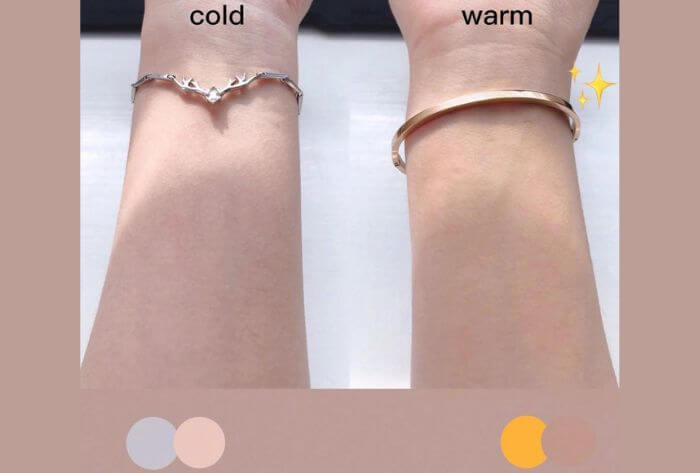
- Warm undertones: Gold looks radiant; silver can look a bit dull.
- Cool undertones: Silver sparkles; gold can look a bit harsh or “fake.”
- Neutral undertones: You can rock both perfectly.
Check the Skin Behind Your Ears
If you have a lot of redness on your face from acne or sun exposure, the face is a bad place to test. Instead, have a friend look at the skin directly behind your earlobe.
This area is rarely touched by the sun and shows your true, unblemished undertone. A yellowish hue here confirms a warm tone, while a pinkish hue confirms a cool one.
The Sun Exposure Test
Think back to your last vacation. Did you turn into a lobster within twenty minutes, or did you gradually turn into a golden deity? This is a direct reflection of your melanin and undertone.
Cool tones usually burn and struggle to tan, while warm tones tan easily. If you find your skin reacts poorly to the sun, you should prioritize products that take care of pasty skin to prevent long term damage.
The Practical Benefits of Knowing Your Complexion
Once you have mastered how to analyze your complexion by skin color chart, a whole new world of efficiency opens up. You will stop wasting money on clothes that sit in the back of your closet.
You will walk into a makeup store and go straight to the “Neutral-Medium” section without having to swatch twenty different bottles.
Furthermore, it helps you understand your skin’s health. For example, if you know you have a cool, fair complexion, you will be more vigilant about checking for sunspots.
If you have a deep, warm complexion, you might realize that certain “brightening” products are actually just making you look ashy because they aren’t formulated for your melanin levels. It is about more than just vanity; it is about self-knowledge and health.
Frequently Asked Questions (FAQ)
Can my skin tone change as I get older?
While your fundamental skin tone (your genetic category) stays the same, your complexion can change. As we age, our skin might become thinner, lead to more visible veins, or develop age spots. However, your undertone will always remain the same.
Is “Olive” the same as “Tan”?
No. Tan is a temporary state of the skin after sun exposure. Olive is a permanent undertone that has a green or gray hue. You can be a “Fair Olive” or a “Deep Olive.”
Why does my foundation look grey on my skin?
This usually happens when you are using a “Cool” foundation on “Warm” or “Olive” skin. The pink pigments in the foundation clash with the yellow or green in your skin, creating a muddy or grey appearance.
How often should I re-analyze my skin?
It is a good idea to check your surface tone every season. You might be a “Medium” in the summer but a “Light-Medium” in the winter. However, you only need to find your undertone once.
Does ethnicity determine my skin color on the chart?
Not necessarily. While certain ethnicities are more likely to have certain tones, there is a massive overlap. You can find very fair individuals with warm undertones and deep-skinned individuals with cool undertones in almost every corner of the world.
The Bottom Line
Finding your true skin tone is a journey that pays off in every area of your personal style. By learning how to analyze your complexion by skin color chart, you are giving yourself the tools to look your best every single day.
Whether it is choosing the right lip gloss or picking out a suit for a wedding, this knowledge is your secret weapon.
Take this seriously and spend some time with a mirror and a piece of white paper today. Once you identify your place on the spectrum, you can start building a lifestyle and a wardrobe that truly celebrates the skin you are in.
After all, when you look good, you feel good, and that confidence is the best accessory anyone can wear.