
 Harriet Wetton

Learning how to cut acrylic sheet may seem like a difficult chore at first, but it does not have to be. Acrylic is a clear, thin plastic sheet that is highly durable, rigid, and transparent.
While acrylic sheet is a difficult material to cut without the right knowledge, this article will help you through the process of doing so effectively and precisely.
Acrylic sheets, sometimes called Perspex or Plexiglass, are popular alternatives to glass. They are lightweight, long lasting, and less expensive. They are often utilized in aquariums, artwork, and airplane covers.
To get the most out of acrylic sheets, you must know how to cut them appropriately. This guide looks at numerous strategies for achieving clean and accurate cuts, making your work easier and more professional looking.
Whether you are a DIY enthusiast or a professional, mastering the art of the perfect cut is essential. Acrylic is prone to cracking if handled roughly, but it is also incredibly forgiving when you use the right speed and tools.
If you have ever wondered how to cut acrylic sheet for a home project like a picture frame or a protective desk shield, you are in the right place.
Understanding Your Material: What is Acrylic?
Acrylic sheets are an effective substitute for glass in instances where weight, cost, and breakage are issues. Despite being more robust than glass, they must be handled with care to avoid cracking or damage during cutting.
Their adaptability enables them to be employed in a variety of applications, ranging from simple DIY efforts to elaborate professional designs. Acrylic sheets, which are available in transparent or colored variations, are easy to cut, shape, and mold.
There are two main types of acrylic: cast and extruded. Cast acrylic is generally higher quality and easier to machine without melting, while extruded acrylic is more common for budget friendly projects.
Knowing which one you have can help you decide how to cut acrylic sheet most effectively. If you find your material melting while you work, you are likely dealing with extruded acrylic and should slow down your tool speed.
How to Cut Acrylic sheet with Dremel
Using a Dremel or a similar rotary tool is one of the most versatile ways to handle smaller tasks. Because these tools spin at very high speeds, they can slice through acrylic quickly. The trick is to use a reinforced cutoff wheel or a specialized plastic cutting bit.
When you learn how to cut acrylic sheet with a Dremel, you must keep the tool moving. If you stay in one spot for too long, the heat from the friction will melt the plastic, leading to a messy edge that requires hours of sanding. Always wear eye protection, as small bits of plastic will fly everywhere during this process.
Using the Hand Saw
Most people try to use a saw to cut the acrylic by hand. Cutting using the saw requires more attention and focus on the work than other electronic tools. To get the batter results to ensure that your saw has uniformed teeth or not.
A fine tooth saw is much better than a coarse one. If the teeth are too large, they will catch on the plastic and cause it to shatter. When figuring out how to cut acrylic sheet manually, remember to keep the angle of the saw low.
This reduces the vibration, which is the number one enemy of a clean acrylic cut. For many, this is the most accessible method because it requires the least amount of expensive equipment.
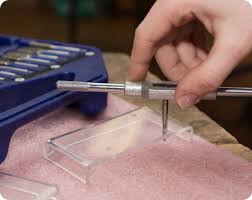
Cutting with a Scoring Knife
It is one of the simplest ways to know how to cut acrylic sheet. We did not use any electronic tool, or heavy power saw to cut the acrylic in this method. We need to follow some necessary steps.
- Mark the sheet areas that you want to cut using a permanent marker or a grease pencil.
- Use a scoring knife to cut the small channels in the acrylic sheet. This tool doesn’t cut all the way through; it creates a “fault line.”
- The scoring knife usually works on a 6.35mm thick sheet or thinner. Anything thicker usually needs power tools.
- Put the acrylic sheet over the hard ends with the score side up. The edge of a table works perfectly for this.
- Clamp it if required to ensure there is zero movement during the snap.
- Turn the projection side of the sheet with fast, swift, and smooth action. Think of it like snapping a chocolate bar.
- As the acrylic turns, the channel will increase as the burst creates around the sheet.
- Turning will result in a cut of two pieces, almost straight and neat ends.
This “score and snap” method is perfect for straight lines. If you need a curve, you will have to look at other options like a jigsaw. Using this method effectively is all about the depth of the score.
You should pass the knife over the line at least five to ten times before attempting the snap. This ensures the break follows the line perfectly.
Cutting with a Jigsaw
A jigsaw is one of the most famous and chosen tools in order to determine how to cut acrylic sheet.
It’s a small handheld device that cuts out the sheet with sharp straight blades and moves up and down in fast motion. If you want to cut the sheet in different shapes or nonlinear shapes, then a jigsaw is the best option.
It will help you cut the sheet accurately and precisely and cut the perfect ends and curves or any other shape. However, it’s desirable to try the jigsaw’s setting and position to get the best results. Always use a blade labeled “for plastics” or a fine tooth metal blade.
If the blade moves too fast, the friction creates heat, and the plastic will fuse back together right behind the cut. To prevent this, you can apply a bit of water or specialized lubricant along the cut line.
Cutting with a Band Saw
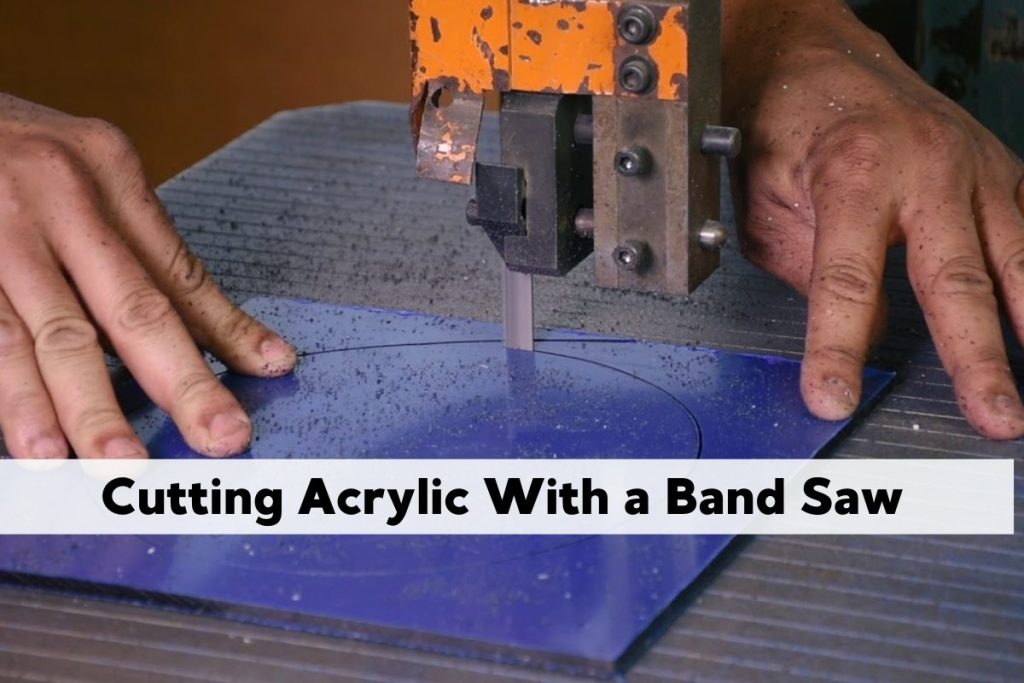
The band saw is the best tool for complicated and challenging cutting. When you are using the band saw, it is important to take care while selecting the blade and setting the blade’s speed.
Putting the rate will help you to decrease the risk of melting and chipping the sheet. It’s suitable for 0.472 inches and thicker than this.
A band saw allows for incredible control. Because the blade moves in one continuous loop, it carries the heat away from the material better than a jigsaw does.
This makes it a favorite for professionals who need to know how to cut acrylic sheet for complex industrial parts or heavy duty DIY projects. Keeping the material flat against the table is vital for safety and accuracy.
Cutting with a Laser
Laser cutting systems are developed to get the problem and fixed the cutting of the acrylic sheet. Laser cutting is one of the approved and selected ways to cut the wanted design sheet. This is the gold standard for high precision work.
Connected to the computer, the laser cutter compiles the design/images into acrylic pieces. If you want to create rugged, involved, and productive shapes with acrylic, then a laser is apparently a better option.
The edges produced by a laser are often “flame polished,” meaning they are already smooth and shiny right out of the machine. This saves you the step of sanding and polishing the edges by hand.
Pro Tips for a Smooth Finish
Once you have decided how to cut acrylic sheet using your preferred method, the work is not quite done. Even the best cuts can leave a slightly rough edge. To get that professional, glass like look, you should follow these steps:
- Sanding: Start with a 120 grit sandpaper to remove any major ridges. Gradually move up to 400, 600, and finally 1000 grit wet/dry sandpaper.
- Polishing: Use a buffing wheel with a specialized plastic polishing compound. This will turn the dull, sanded edge into a transparent, glowing surface.
- Cleaning: Never use ammonia based cleaners (like standard Windex) on acrylic. It can cause “crazing,” which are tiny internal cracks. Use mild soap and water or a dedicated acrylic cleaner.
Maintaining your tools is also a part of the process. A dull blade is the most common reason for a failed project. If you find yourself struggling with how to cut acrylic sheet, check your equipment first.
For more tips on maintaining your workspace and staying productive, check out our guide on being the best employee or hobbyist in your shop.
Final Thoughts
Acrylic sheets are versatile and resilient, making them an excellent choice for a variety of projects. Cutting them may appear difficult at first, but understanding the proper procedures and tools may make the task simple and gratifying
. From simple window replacements to complex artistic sculptures, the possibilities are endless once you master the technique.
To summarize, begin by marking your desired cutting lines precisely. Depending on your tools and the complexity of your design, choose one of the strategies described above.
Whether you use a simple scoring knife or a high tech laser cutter, understanding how to cut acrylic sheet correctly will ensure that your projects work out wonderfully.
If you are working on other home improvements, you might also find our guide on how to soundproof a door very helpful.
Mastering these procedures can save you time, prevent material waste, and ensure professional quality outcomes every time you deal with acrylic sheets. Take your time, prioritize safety, and enjoy the creative process of working with this incredible material.
FAQs: How to Cut Acrylic Sheet
1. Can I cut an acrylic sheet at home?
Yes, you can cut acrylic sheets at home with a scoring knife, jigsaw, hand saw, or even a Dremel tool. Each approach necessitates careful handling to ensure exact cuts without destroying the sheet. For beginners, the scoring knife is usually the safest starting point.
2. What is the best tool for cutting acrylic sheets?
The ideal tool depends on the sort of cut required. A scoring knife is ideal for making straight cuts on thin material. A jigsaw or laser cutter is perfect for creating curves and complicated designs. Band saws are ideal for thick sheets that require heavy duty power.
3. Can I use a regular saw to cut acrylic sheets?
Acrylic sheets can be cut with either a conventional hand saw or a fine toothed saw. You must ensure that the saw blade has consistent, small teeth. Standard wood saws with large teeth will likely cause the material to chip or crack.
4. Do I need to clamp the acrylic sheet while cutting?
Clamping the acrylic sheet is highly suggested, particularly when using a scoring knife or hand saw. This serves to keep the sheet stable, assuring accuracy and eliminating unintended movement which often leads to jagged edges.
5. How thick can an acrylic sheet be for scoring?
Scoring is appropriate for acrylic sheets up to 6.35 mm (about 1/4 inch) thick. If you try to score and snap anything thicker, you run a high risk of the material breaking in an unpredictable direction. Jigsaws or bandsaws are better suited to these thicker sheets.
6. How do I prevent the acrylic from melting while cutting?
To prevent melting, use a blade with fewer teeth per inch (TPI) and reduce the speed of your power tool. You can also leave the protective plastic film on the sheet while cutting to provide a bit of extra protection against friction heat.
For more DIY guides and professional tips, feel free to explore our articles on how to make lip gloss or learning how to get your first job on Upwork to fund your next big project!