
 Harriet Wetton
Trees are truly one of the greatest blessings on our planet. They provide the very oxygen we breathe, offer shade on scorching summer days, and add a touch of natural beauty to our homes. However, there are times when a tree transitions from a backyard asset to a significant liability.
Whether it is an invasive species, a diseased trunk, or roots that are threatening your home foundation, knowing how to kill a tree safely and effectively becomes a necessary skill for any homeowner.
When a tree grows out of control or becomes structurally unsound, it can damage your property or turn into a serious safety hazard. While we always advocate for planting and raising trees whenever possible, removing a problematic one is sometimes the only way to protect your landscape.
In this guide, we will walk you through the most reliable physical and chemical methods to handle this task, ensuring your garden remains a safe and manageable space.
Real Reasons for Killing and Removing a Tree
It is never an easy decision to remove a living thing from your yard. However, as an expert in land management, I have seen many cases where keeping a tree does more harm than good. Understanding why you might need to take action is the first step in the process.
- Structural Damage: Overgrown roots are incredibly powerful. They can crack your driveway, lift up sidewalks, or even penetrate your septic operation and plumbing lines.
- Disease and Pests: A damaged or rotting stalk is an open invitation for germs, fungi, and boring insects. If left alone, these pathogens can spread to the healthy plants in your garden.
- Safety Hazards: If a tree is leaning precariously toward your house, shed, or a neighbor’s vehicle, it is a ticking time bomb. One strong storm could lead to thousands of dollars in property damage.
- Resource Competition: Sometimes, a large, non productive tree sucks up all the moisture and nutrients from the soil, preventing your other plants or vegetables from growing. Removing it allows you to grow and store fresh produce more effectively.
- Allergies and Mess: Some species release pollen or dust that can cause severe allergic reactions. Others drop excessive fruit or sap, making it nearly impossible to maintain a clean lawn.
How to Kill a Tree: Choosing the Right Approach
There are two primary schools of thought when it comes to how to kill a tree: the physical method and the chemical method. The right choice for you depends on your comfort level with tools, your timeline, and the environment of your garden.
Many homeowners feel hesitant about chemical solutions. There is often a concern that herbicides might leach into the soil and harm nearby flowers or food crops.
While this is a valid concern, modern application techniques allow for very targeted treatment. If you are someone who prefers a more hands on, chemical free lifestyle, the physical methods like girdling or cutting might be your best bet.
The Most Popular Method: Cutting Down the Tree
If you want immediate results, cutting the tree down is the most straightforward way to solve the problem.
This is the preferred method for many because it eliminates the visual eyesore and the physical threat instantly. However, this is also the most dangerous path.
If you are dealing with a small sapling, you can likely handle it with a sharp saw and some safety gear. But for large, mature trees near power lines or buildings, please do not attempt this alone.
Hiring a professional tree feller is a smart investment in your safety. Once the main trunk is down, you will still need to address the stump and roots to ensure the tree does not start sprouting back from the ground.
How to Kill a Tree by Injecting Poison and Toxified Elements
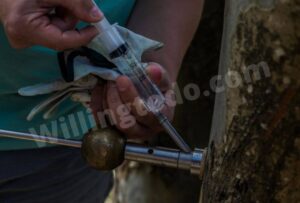
Injection is a highly effective surgical way to kill a tree without affecting the surrounding vegetation. By delivering a herbicide directly into the vascular system of the tree, you ensure that the chemical stays within the target organism.
To use this method, you need to make incisions or drill holes into the trunk. Space these holes about 2 to 6 inches apart around the entire circumference of the tree.
A good rule of thumb is to place them about 5 feet above the ground. You want to drill at a slight downward angle, roughly 2 to 3 inches deep, so the liquid doesn’t just leak out.
While this method requires specific equipment or a steady hand with a drill, it is incredibly reliable.
The tree will naturally transport the toxin from the injection site up to the leaves and down to the roots, leading to a complete shutdown of its biological functions. It is a bit like a quiet removal that doesn’t involve the noise of a chainsaw.
Starving a Tree: The Girdling Technique
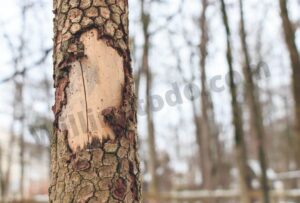
Did you know that the skin or bark of a tree is actually its lifeline? Just beneath the outer bark lies the phloem and cambium, the layers responsible for moving nutrients and moisture from the leaves back down to the roots. If you interrupt this flow, the tree will eventually starve to death.
This process is known as girdling. To do this properly, you must remove a strip of bark and the underlying tissue in a complete circle around the trunk. For a small tree, a strip 2 inches wide is usually enough.
For massive, older trees, you might need to remove an 8 inch band. If you leave even a small bridge of bark intact, the tree might survive, so be thorough.
Girdling is a slower process, but it is effective. Just be aware that as the tree dies, it will become brittle. You must keep an eye on it to ensure it doesn’t fall unexpectedly.
This method is often used in forest management to create standing dead trees that provide habitats for wildlife.
How to Kill a Tree Using Rock Salt
If you are looking for a household solution, rock salt is a classic choice. Salt is naturally high in sodium, which is toxic to trees in large quantities.
It works by interfering with the tree’s ability to absorb essential minerals like potassium and magnesium. Without these, the tree cannot perform photosynthesis or regulate its water intake.
The most effective way to use salt is to drill deep holes into the roots or the base of the trunk and pack them with rock salt.
You then add a little water to help the salt dissolve and soak into the wood. Some people even create a salt barrier in a trench around the base.
A word of caution: Salt is not selective. It stays in the soil for a long time and will kill almost any plant life it touches. If you have a beautiful lawn or a nearby flower bed, use salt very sparingly.
It is much harder to fix salty soil than it is to apply a targeted herbicide. If you find your garden soil has become problematic, you might need to take care of the ground much like you would take care of your own skin after an injury with patience and the right nutrients.
Advanced Tips for Success
When you are learning how to kill a tree, timing is everything. For chemical methods, the best time to act is usually during the late spring or early summer when the tree is actively moving sap. This ensures the poison is distributed quickly.
If you are girdling a tree, doing it before the winter can be effective, as the tree will lack the energy reserves to recover in the spring.
Always prioritize safety. Wear gloves, eye protection, and sturdy boots. If you are using chemicals, read the labels twice. Even natural solutions can be irritants.
If the tree is dead but still standing, it can become a home for pests or a fire risk, so have a plan for how you will eventually remove the wood.
While you are working on your outdoor projects, you might find that you have other areas of your home that need attention. Whether it is learning how to clean your gear after a day in the dirt or improving your home’s privacy, a well maintained property is a source of pride.
Common Mistakes to Avoid
One of the biggest mistakes people make when trying to figure out how to kill a tree is being too impatient. Physical methods like girdling or starving can take months or even a year to fully work. Don’t assume the method failed just because the leaves are still green after a week.
Another mistake is using the wrong chemical. Household bleach or motor oil are often suggested in online forums, but these are terrible for the environment and often ineffective at killing the deep root system.
Stick to products specifically designed for stump or brush removal. They are designed to break down over time, whereas motor oil will poison your land for decades.
Conclusion
Trees are a vital part of our ecosystem, and we should always treat them with respect. They provide us with so many benefits, from the air we breathe to the aesthetics of our neighborhoods.
However, a responsible homeowner knows when a tree has become a danger. By learning how to kill a tree properly, you can manage your land effectively and keep your family safe.
Whether you choose to cut it down, use the injection method, or starve it through girdling, ensure you are following the steps carefully.
If a task ever feels too big or too dangerous, never hesitate to call in a professional. A safe and clean environment is always worth the extra effort.
Once the tree is handled, you can focus on more positive projects, like creating something new or building your career. Taking control of your surroundings is just one way to live a more proactive and successful life.
Frequently Asked Questions
How long does it take for a tree to die after girdling?
The timeline for girdling depends on the size and species of the tree. Generally, you can expect the tree to show signs of decline within a few months, but it may take a full growing season for the tree to die completely. Patience is key with this physical method.
Will killing a tree with salt ruin my soil forever?
Salt does not disappear quickly. It can stay in the soil for several years, making it difficult for new plants to grow in that specific spot. If you plan to replant in that area soon, it is better to use a targeted herbicide or physical removal instead of salt.
Is it legal to kill a tree on my own property?
In most places, you have the right to manage the plants on your land. However, some cities have Tree Protection Ordinances, especially for historical or very old trees.
It is always a good idea to check with your local council or homeowners association before starting.
Can I use vinegar to kill a large tree?
Vinegar is often used as a natural weed killer for small plants, but it is rarely strong enough to kill a large, established tree. The acetic acid might burn the leaves, but it won’t reach the deep root system of a mature tree effectively.
What is the safest way to kill a tree near my house?
The safest method is the injection method or targeted stump treatment. These techniques ensure that no chemicals drift onto your house or other plants.
However, if the tree is large enough to fall on your roof, the safest way is always to hire a professional tree removal service.
Do I need to remove the stump after the tree dies?
You don’t strictly have to, but leaving a stump can attract termites and other pests. It can also be a tripping hazard. Most people choose to grind the stump or use a stump rotting chemical to clear the space for future landscaping.